

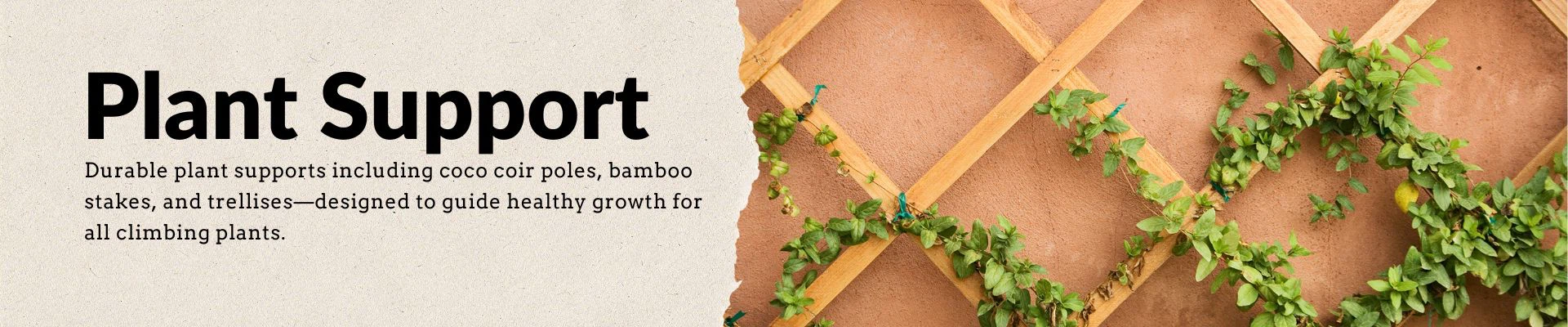
Plant Support


The best material for plant supports depends on the plant type, required strength, growing environment and intended lifespan.
- Steel is a popular choice for heavy or mature plants because it provides strong, stable and long-lasting support. Powder-coated or plastic-coated steel also offers improved outdoor corrosion resistance.
- Bamboo and wood provide a natural appearance and are widely used for plant stakes, trellises and supports for vegetables, flowers and climbing plants.
- Plastic and fiberglass are lightweight, moisture-resistant and easy to handle, making them suitable for general garden and indoor plant support applications.
For retail garden ranges, there is no single best material. Steel is generally preferred for strength and durability, while bamboo, wood, plastic and fiberglass provide practical alternatives for different plant types, price points and garden styles.


How to make a plant support frame?
A simple plant support frame can be made with bamboo canes, wooden stakes, metal stakes or fiberglass rods, depending on the plant and the strength required.
Push 3–4 stakes firmly into the soil around the plant, keeping enough space for future growth. Connect the stakes with garden twine, plant ties, wire or horizontal crossbars to create a stable frame. For climbing plants, add trellis netting or a grid between the supports so stems and tendrils can climb naturally.
The frame should be tall and strong enough for the mature plant, but positioned so it does not restrict stems, leaves or fruit as the plant grows.
Natural plant supports can be made from bamboo canes, wooden stakes, branches, twigs or other untreated plant materials. These materials work especially well for vegetables, flowers and climbing plants while blending naturally into the garden.
For a simple support, insert several bamboo canes or branches firmly into the soil and tie them together with jute twine or natural garden string. They can be arranged as a teepee, A-frame, simple trellis or individual stake, depending on the plant.
For climbing vegetables such as peas and beans, taller branching supports provide plenty of places for tendrils to attach. For flowers and perennials, shorter stakes or twig frameworks can provide discreet support while maintaining a natural garden appearance.


What can I use instead of a trellis?
Instead of a traditional trellis, you can use bamboo stakes, plant cages, obelisks, garden arches, support netting, wire frames or simple stakes with garden twine.
The best alternative depends on the plant. Plant cages and stakes work well for tomatoes and other vegetables, while arches, obelisks and wire supports are suitable for climbing flowers and vines. For peas, beans and cucumbers, support netting stretched between stakes provides a simple and space-efficient option.
For a more natural garden look, bamboo canes or sturdy branches can also be tied together to create a basic climbing structure.
FAQ
Q: When Should I Support My Plants?
A: Plant supports are best installed early in the growing season, before plants become tall, heavy or difficult to manage. Early installation also reduces the risk of damaging established roots and stems. For fast-growing vegetables and climbing plants, supports can be added at planting time.
Q: How Tall Should a Plant Support Be?
A: The right height depends on the mature size and growth habit of the plant. Short supports are suitable for compact flowers and perennials, while tomatoes, beans and climbing plants generally require taller stakes, cages or trellises. Ideally, the support should accommodate the plant throughout its main growing period.
Q: How Do You Support Plants Without Damaging Them?
A: Use soft plant ties, clips or flexible garden twine and avoid tying stems too tightly. Leave enough room for stems to expand as they grow. Supports should also be positioned securely so they do not rub against or cut into the plant during wind or movement.
Q: What Plants Need Plant Supports?
A: Plants that are tall, top-heavy, climbing or prone to bending often benefit from support. Common examples include tomatoes, peppers, peas, beans, cucumbers, peonies, dahlias, climbing roses, clematis and indoor climbing plants such as Monstera.
We're well-known as one of the leading plant support and fence manufacturers and suppliers in China. Please rest assured to wholesale customized plant support and fence made in China here from our factory. Quality products and low price are available.
collapsible tomato cages, Garden Accessories, Tomato Cage